Many people use “straps” and “tie downs” as if they mean the same thing. They do not always describe the same product.
In practical terms, a strap is usually the webbing or flexible securing material. A tie down is a complete restraint system. It may include webbing, hooks, ratchets, cam buckles, fittings, and anchor points. The difference becomes clear beside a loaded trailer. A loose strap rests across the cargo. A properly assembled tie down applies controlled tension and keeps the load from shifting.
Cargo-control specialist John R. Miller explains, “A strap is a component; a tie down is the complete working system.” That distinction is useful, although it needs careful context. Product names vary between manufacturers, industries, and regions. Some sellers call a webbing assembly a strap. Others use “tie down” for nearly any restraint product.
This guide examines how Straps And Tie Downs differ in design, purpose, strength, and everyday handling. It also considers working load limits, attachment points, abrasion, moisture, and inspection habits. A bright polyester strap may look reliable, yet hidden cuts can weaken it. A strong ratchet cannot correct a poor anchor position. Small details matter.
The safest choice depends on the cargo, movement, equipment, and operating conditions. There is no universal answer. That is the part many quick explanations miss. Understanding the terminology helps users select the right system, apply tension correctly, and recognize when replacement is necessary. Confidence should come from inspection, not appearance alone.
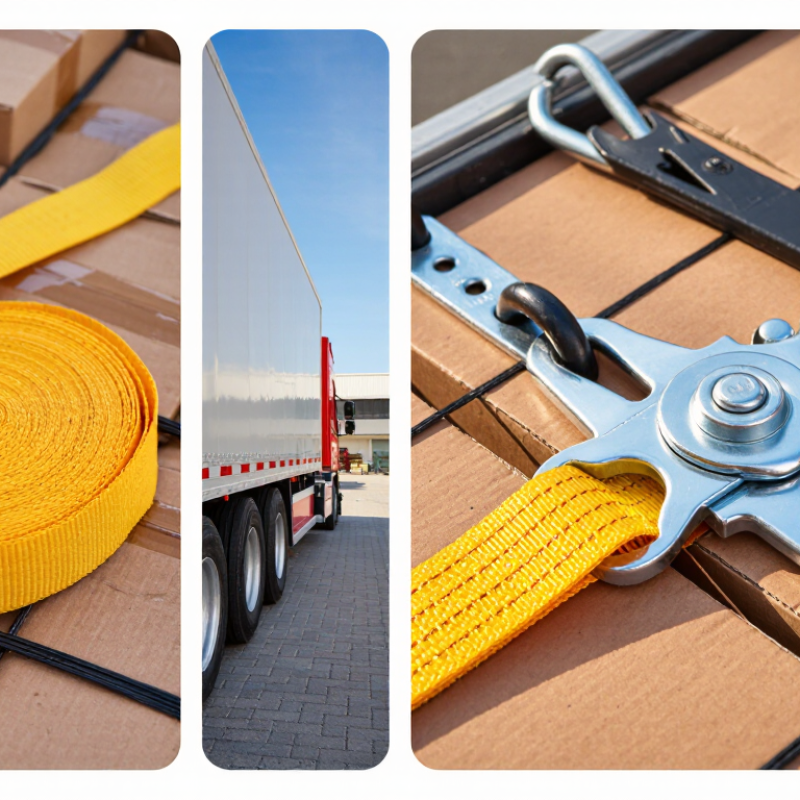
Straps vs. Tie-Downs: Definitions in Modern Cargo-Securement Standards
What Is the Difference Between Straps and Tie Downs?
Straps vs. Tie-Downs: Definitions in Modern Cargo-Securement Standards
In cargo work, a strap usually means the flexible webbing itself. It may be polyester, nylon, or another engineered textile. A tie-down is the complete securement arrangement. It can include webbing, a ratchet, hooks, anchor points, and edge protection. The terms overlap in everyday speech. Their technical meanings are not always identical.
Labels can mislead. Modern cargo-securement standards focus on performance, not wording alone. Inspect the strap for cuts, heat damage, crushed fibers, and chemical staining. Check the hardware for distortion and secure engagement. A loaded pallet may appear stable, yet a loose ratchet can allow movement during braking. Small errors multiply.
The working load limit matters more than the strap’s appearance. It must suit the cargo weight, load shape, anchor strength, and tie-down method. Sharp steel edges require suitable protection. Smooth packaging may need greater tension or additional restraint. Friction helps, but it should not replace positive securement. In practice, tie-down capacity can be misunderstood when users count only the webbing. The complete system may be weaker at its hooks or anchor points. That distinction deserves attention.
Terminology also varies between industries and regions. Therefore, operators should follow the applicable securement standard, equipment instructions, and site procedures. A pre-use inspection should include the cargo, restraints, anchor points, and tensioning devices. Fit matters more. Even experienced teams can overlook a damaged edge protector hidden beneath a strap.
Webbing, Ratchets, and Hooks: How Strap Components Create Restraint
What Is the Difference Between Straps and Tie Downs?
A strap is usually the webbing component. A tie down is the complete restraint assembly. It may include webbing, ratchets, hooks, and anchor points. Webbing spreads pressure across cargo surfaces. Polyester is common because it resists stretching and moisture. However, material performance changes with cuts, heat, abrasion, and chemical exposure. A damaged strap can look usable while hiding weakened fibers.
Ratchets create tension through mechanical leverage. They do not automatically make an inadequate strap safe. Hooks transfer force into rails, rings, or approved attachment points. Every component should match the assembly’s working load limit, or WLL. The Federal Motor Carrier Safety Administration states that aggregate WLL should equal at least 50% of the cargo weight under its cargo securement rules. This figure is a baseline, not permission to ignore movement, vibration, or sharp edges. The distinction is easy to blur. That shortcut can fail.
Tips: Check webbing for cuts, glazing, loose stitching, and crushed sections before loading. Keep the strap flat, not twisted, through the ratchet. Protect edges with corner guards. Confirm hook engagement by hand. Read the sewn label because breaking strength and WLL are different measurements. The Web Sling and Tie Down Association emphasizes following rated capacities and inspecting restraint equipment before use. A practical improvement is documenting inspections, although many small operations still rely on memory. That habit deserves reconsideration.
Working Load Limit (WLL): The Key Rating for Tie-Down Capacity
What Is the Difference Between Straps and Tie Downs?
A strap is usually the webbing component. A tie down is the complete securing assembly. It may include webbing, hooks, a tensioning device, and end fittings. The difference matters because capacity belongs to the finished assembly, not the fabric alone. A thick-looking strap can still fail at a weak hook or damaged stitch.
Working Load Limit, or WLL, is the practical rating for tie-down capacity. It is not the breaking strength. WLL reflects a controlled safety margin and must be read from the label or manufacturer’s specification. The Working Load Limit Association recommends evaluating the complete assembly and its weakest component. In field inspections, I check labels first, then look for cuts, heat damage, flattened webbing, and distorted hardware. Small defects are easy to dismiss.
For U.S. road cargo, the Federal Motor Carrier Safety Administration’s Cargo Securement Handbook states that the combined WLL of all tie-downs should equal at least 50% of the cargo weight. This figure is a useful reference, not a universal rule for every region or load. A 1,000-kilogram load therefore needs at least 500 kilograms of combined WLL under that guidance. Load shape, friction, anchor strength, and movement still matter. One overlooked anchor point can invalidate the calculation. That is the uncomfortable part: arithmetic may look correct while the real setup remains unsafe.
FMCSA §393.102: Aggregate WLL Must Reach at Least 50% of Cargo Weight
What Is the Difference Between Straps and Tie Downs?
A strap is usually the webbing or tensioning component. A tie down is the complete securement assembly, including webbing, hooks, ratchets, anchors, and fittings. The distinction matters during inspections. A strong-looking strap does not guarantee a compliant system. The weakest component controls the working load limit, or WLL. Under FMCSA §393.102, the aggregate WLL of all tie downs must equal at least 50% of the cargo weight. For a 4,000-pound load, the system needs at least 2,000 pounds of aggregate WLL. This calculation must reflect the actual equipment in use.
Field checks often reveal simple errors. Operators may count straps but ignore damaged hooks or weak anchor points. That approach is incomplete. FMCSA securement guidance also requires tie downs to prevent shifting, rolling, or falling under normal operating forces. Blocking, friction, and proper placement can support the system, but they do not excuse inadequate WLL. Keep labels readable. Inspect cuts, burns, abrasion, stretched webbing, and bent hardware before loading.
The CVSA 2024 International Roadcheck report recorded 48,761 commercial vehicle inspections. Cargo securement produced 1,991 out-of-service violations, ranking among the leading categories. That number deserves attention. It suggests that paperwork and equipment selection are still not enough. A practical habit is to calculate WLL before tightening the first strap. I have seen securement plans fail on details, not effort. The calculation can feel obvious, yet it is often skipped.
EN 12195-2 and Load Geometry: Selecting the Right Restraint System
A strap is the flexible textile component. A tie down is the complete restraint method, including the strap, tensioner, anchor points, load, and contact surface. This distinction matters when applying EN 12195-2, which covers lashing straps made from man-made fibres. The standard does not make every restraint arrangement automatically safe. Load geometry still decides how the system performs.
For a tie-down arrangement, the strap presses the cargo against the deck. Friction then helps resist movement. The working effect depends on the strap’s standardised STF value, tension, load weight, surface condition, and lashing angle. A low angle may create strong downward force but poor lateral control. A steep angle may hold the load more effectively sideways, yet reduce the available clamping force. Small details matter. Wet timber, dusty pallets, or sharp edges can change the result quickly.
Direct lashing uses the strap to connect the load with suitable anchor points. In that case, the LC value and restraint direction become central. Anchor strength must also match the planned geometry. Edge protectors can prevent cutting and distribute pressure, but they cannot repair an unsuitable angle or weak attachment point. During inspections, a load can look tidy while remaining under-secured. That is an uncomfortable lesson. Calculations should be checked against the real load, not an ideal drawing. EN 12195-2 offers a reliable technical framework, but competent selection, inspection, and adjustment complete the restraint system.
What Is the Difference Between Straps and Tie Downs?
EN 12195-2 and Load Geometry: Selecting the Right Restraint System
A strap is the webbing assembly, while a tie-down is the complete restraint method used to secure a load. Under EN 12195-2, web lashing assemblies are assessed using properties such as lashing capacity, standard tension force and elongation. Load geometry also affects the downward force created by a tie-down.
Example calculation: The chart assumes two symmetrical webbing legs, each with a standard tension force of 500 daN. Downward force is calculated as 2 × STF × sin(angle). Actual securing performance depends on the certified lashing assembly, friction, anchor points, pretension, load stability and the applicable EN 12195 calculation.
FAQS
A strap is usually the flexible webbing component. It may be polyester, nylon, or another engineered textile.
A tie-down is the complete securement assembly. It can include webbing, hooks, a ratchet, anchor points, and edge protection.
Capacity belongs to the complete assembly, not the fabric alone. A strong-looking strap may have a weak hook or damaged stitching.
Working Load Limit, or WLL, is the practical rated capacity of a securement assembly. It is not the breaking strength.
Look for cuts, heat damage, crushed fibers, flattened webbing, and chemical stains. Check hidden areas too.
Examine hooks, anchor points, ratchets, and end fittings. They should engage securely and show no distortion.
Some road guidance requires combined WLL to equal at least half the cargo weight. A 1,000-kilogram load would need 500 kilograms under that guidance.
No. Friction helps, but it should not replace suitable restraints. Smooth packaging may need extra tension or additional restraint.
The anchor, hook, load shape, or tie-down method may be weaker than expected. The arithmetic can look right while one damaged component remains overlooked.
Conclusion
Understanding the difference between Straps And Tie Downs is essential for choosing a safe and effective cargo-securing system. Straps generally refer to the webbing or flexible material used to wrap, hold, or stabilize a load, while tie-downs describe the complete restraint assembly, which may include webbing, ratchets, hooks, and other connecting components. Together, these parts create tension that limits cargo movement during transport.
A critical factor in selecting a tie-down is its Working Load Limit (WLL), which indicates the maximum load the system is designed to restrain under specified conditions. Under FMCSA §393.102, the combined WLL of all tie-downs must be at least 50% of the cargo’s weight. EN 12195-2 also emphasizes matching the restraint system to load geometry, friction, tie-down direction, and anticipated forces. Proper selection and positioning help maintain stability, reduce shifting, and support safer transportation.
 ZhongQi Growth
